Wolf range repairacross South Florida.
GR gas ranges, DF dual-fuel, rangetops with the infrared griddle — the red-knob platform has known habits, and our gas-licensed techs have repaired them across thousands of South Florida tickets. $59 diagnostic free with repair, same-day dispatch across Miami-Dade, Broward, and Palm Beach.
- 19Full-time techniciansNot subcontractors
- 4.79From 1254 verified reviewsGoogle, Yelp & other platforms
- $59Diagnostic visitCredited to your repair
- 70Cities coveredMiami-Dade · Broward · Palm Beach
- PriorityMost visits booked <1 hourOpen 7 days · 7 AM – 9 PM
- 10-yrParts warranty up to 10 years90-day labor · Licensed & insured
GR, DF, and SRT — same burners, very different ovens
Wolf's range family shares its top end — the dual-stacked sealed burners with their signature simmer — but splits sharply below the cooktop. The GR series is all-gas: the oven fires through a hot-surface glow-bar igniter and a safety valve, a deliberately simple system whose failures are mechanical and predictable. The DF dual-fuel series puts an electric convection oven under the gas top, run by control boards and relays — more precise, more capable, and with an entirely different failure vocabulary. Rangetops (SRT) and the older R series round out the family. Knowing which platform you own is the first half of a correct phone diagnosis, and it's why our dispatchers ask for the model before the truck rolls.
The failure patterns sort cleanly by platform. GR ovens that heat slowly, run cold, or quit entirely almost always trace to a weakening glow-bar igniter — it still glows, so owners assume it works, but its current draw has dropped below what the safety valve needs to open fully. It's a measured diagnosis (amp clamp, two minutes) and a same-visit fix from truck stock. DF ovens fail through their electronics: a relay board that stops feeding an element, a temperature sensor drifting out of spec, a control board that lost a convection mode. Up top, both platforms share the South Florida classic — burners clicking continuously after a boil-over or on a humid morning, which is moisture or grease tracking a spark switch, occasionally the spark module itself.
Two Wolf-specific subsystems deserve their own mention. The infrared griddle (and charbroiler on 48-inch units) runs ceramic infrared elements with their own ignition; when the griddle won't light or heats unevenly, it's a distinct diagnosis from the burners. And the dual-stacked burner's simmer ring has its own spark and flame geometry — a burner that lights high but won't hold simmer is usually a fixable alignment or sensing issue, not a defect.
Gas-licensed techs, measured diagnosis, one-visit bias
Range work is gas work, and we treat it that way: licensed techs, leak-checks after every connection we touch, and burner verification across the full top before we leave. The diagnostic itself is measurement-driven — igniter current draw against spec on GR ovens, element resistance and relay actuation on DF units, circuit isolation on clicking burner switches — so the quote you approve names the actual failed part, not a hypothesis.
We stock the high-frequency Wolf parts: glow-bar igniters for the common GR ovens, spark modules and switch harnesses, and door hardware. Less common parts — DF relay and control boards, griddle elements — come through distribution in typically 2-4 business days. The $59 diagnostic is free when you approve the repair, every part we install carries the 90-day parts and labor warranty, and the repair history stays logged against your range for the next visit, whoever runs it.
Wolf range repair — failures we see.
Documented from the platform, not a brochure.
The single most common Wolf range repair. The hot-surface igniter ages below the amperage the gas safety valve requires: the oven fires late, undershoots temperature, or stops lighting entirely while the igniter still visibly glows. We measure current draw against spec — a two-minute, definitive test — and replace from truck stock. Most of these close in one visit.
The South Florida classic: after a boil-over or on a humid morning, the spark system clicks with all knobs off or keeps clicking after a burner lights. One leaking igniter switch drags the whole shared spark circuit. We isolate which switch leaks rather than replacing the full harness on a guess — though on older heavily-cooked ranges, the harness is sometimes the honest answer.
Dual-fuel ovens route bake, broil, and convection through relay boards with a known aging pattern. Classic presentation: bake works, broil is dead, or convection modes quietly disappeared from the menu. We confirm at the board with a meter before ordering, and we check the elements it feeds so a failed element doesn't masquerade as electronics.
A Wolf oven baking 25-50°F off setpoint usually has a temperature sensor whose resistance curve has drifted — measurable in minutes against the spec table. On DF units the control board's calibration offset gives us a second lever. Either way, you get an oven that bakes true again, verified with a probe before we leave.
The infrared griddle runs its own ceramic elements and ignition circuit. No-light conditions trace to the griddle igniter or its valve; uneven heat usually means a degraded element. It's a Wolf-specific subsystem many shops have never opened — for us it's a routine ticket with parts a few days out at worst.
Wolf oven doors are heavy, and after years of daily use the hinges sag — the door drops the last inch, heat bleeds at the top, preheats stretch, and bake times wander. Owners frequently blame the thermostat. A hinge kit and gasket check restores the seal and the temperature behavior together.
The lower simmer ring has its own flame geometry and sensing; when it dies at low settings, the cause is usually a misaligned burner cap, a fouled sensing electrode, or debris in the simmer ports. This is tuning work — exactly the kind of repair that separates platform familiarity from parts-cannon service.
DF convection motors announce bearing wear as a scrape or drone before failing outright. Caught at the noise stage it's a clean motor swap; run to failure, it can cost a fan blade too. If your oven has started humming a new tune, the early version of this repair is meaningfully cheaper.
Typical Wolf range repair costs.
| Repair | Typical range | Notes |
|---|---|---|
| Diagnostic visit | $59 | Free with repair |
| Oven glow-bar igniter (GR series) | $250–$400 | The most common Wolf repair; truck stock |
| Spark igniter switch / circuit isolation | $200–$380 | Fixes continuous clicking |
| Spark module replacement | $280–$450 | When the module itself has failed |
| Oven temperature sensor | $200–$350 | Includes probe-verified calibration check |
| DF relay / control board | $450–$800 | Only after meter confirmation at the board |
| Door hinge kit + gasket | $300–$500 | Restores seal and bake accuracy |
| Convection fan motor (DF) | $300–$500 | Cheaper at the first noise than after failure |
Typical parts-plus-labor ranges for South Florida jobs on 30-48" Wolf ranges; 48-inch double-oven configurations can run higher on oven-side repairs. Written quote after the $59 diagnostic, which is free if you approve the repair. 90-day parts and labor warranty.
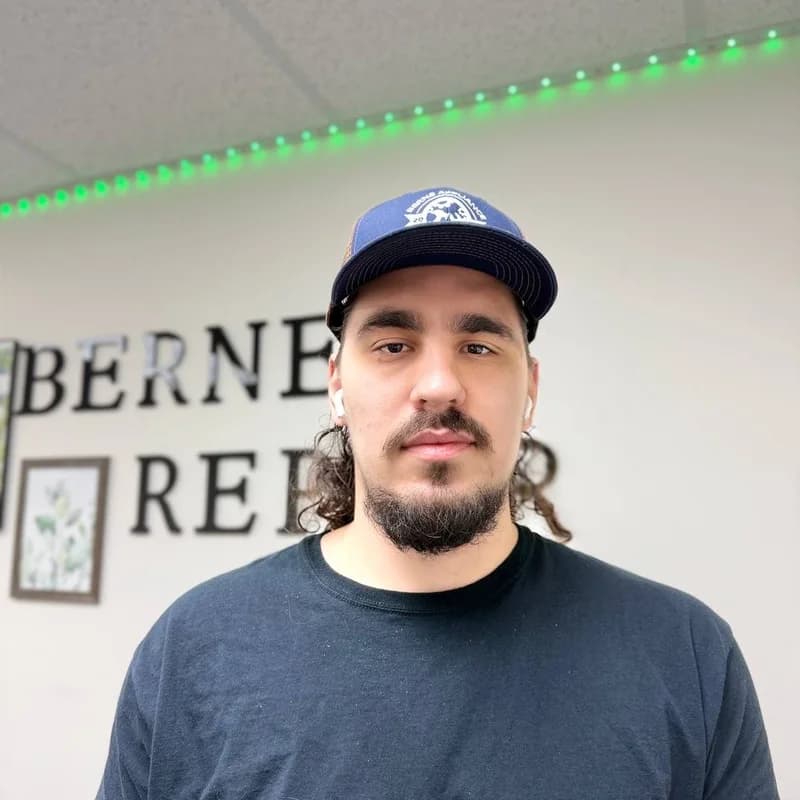
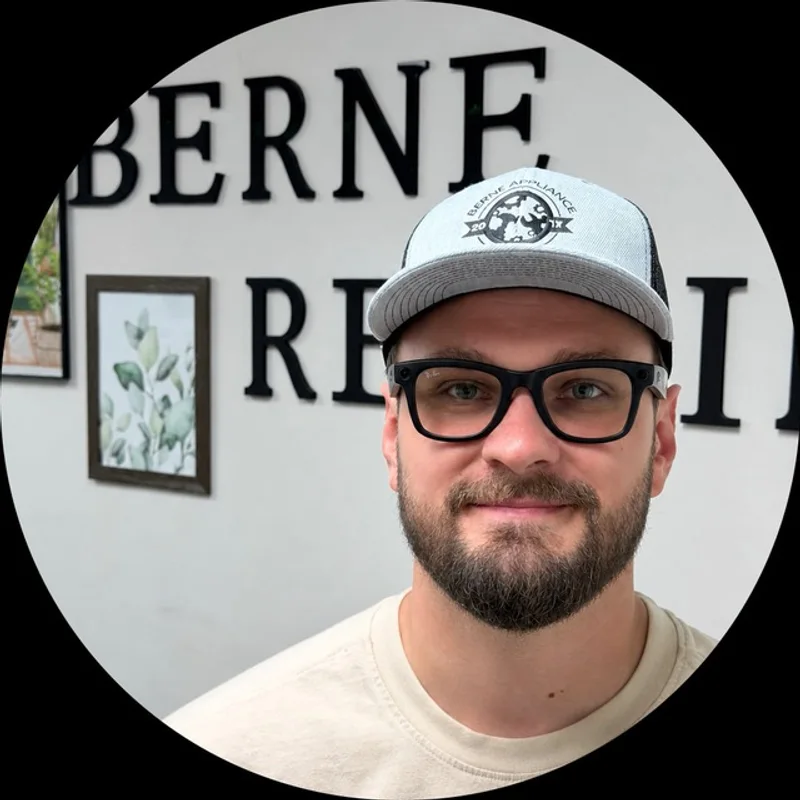
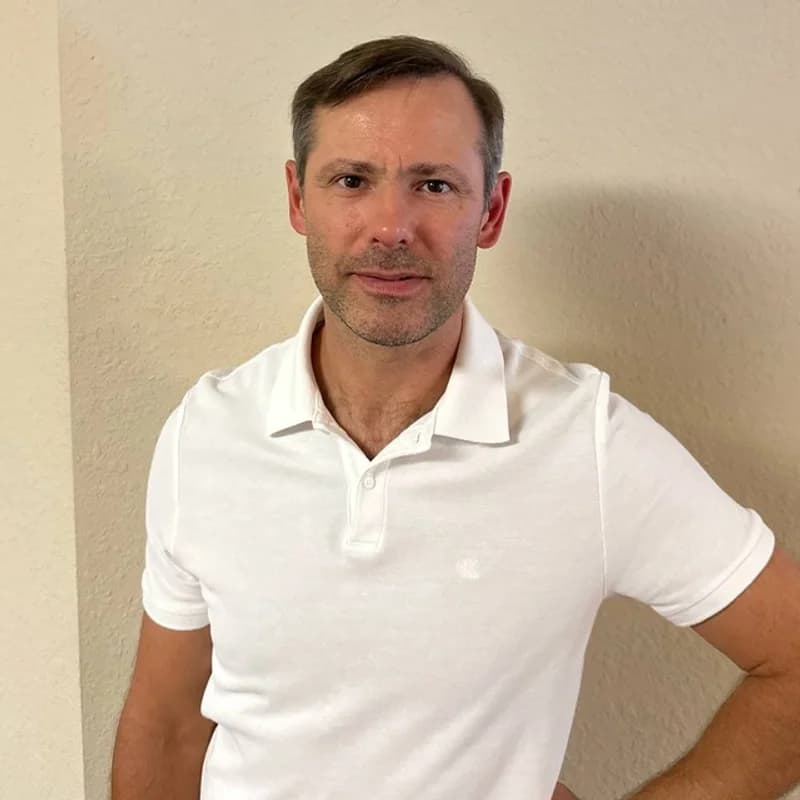
Specialists for Wolf at Berne.
The technicians on the Berne roster who carry Wolf factory training, model-specific parts on the truck, and the diagnostic habit Wolf platforms reward.
Wolf range repair — questions we get
My Wolf oven's igniter glows but the oven won't heat. How is that possible?
A glow-bar igniter can glow visibly while drawing too little current to open the gas safety valve — that's the standard end-of-life behavior, and it's exactly why visual inspection misleads. We measure the igniter's amp draw against spec, which settles the question in two minutes. Replacement typically runs $250-$400 and closes the same visit from truck stock.
Why do my Wolf burners click constantly in the morning?
Humidity. Moisture tracks into a spark igniter switch overnight and the shared spark circuit fires until it dries out — the same thing happens after boil-overs. Sometimes it self-resolves by noon, but a switch that's begun leaking only gets worse. We isolate the specific leaking switch and replace it, which usually runs $200-$380.
Is Wolf range repair expensive?
Less than the badge suggests. The most common repairs — igniters, spark switches, sensors — land in the $200-$450 range, parts and labor. The expensive end (DF control boards, $450-$800) is much rarer and only quoted after meter-level confirmation. Against a $7K-$15K replacement range, repair wins the math in nearly every scenario we see.
Do you repair the infrared griddle and charbroiler?
Yes — the ceramic infrared elements, their ignition circuits, and the valves behind them. It's a Wolf-specific subsystem that generic shops often decline. Won't-light conditions and uneven heat are both serviceable, with parts typically 2-4 business days when they're not on the truck.
My Wolf bakes unevenly / runs hot. Can it be recalibrated?
Usually, yes. We first measure the temperature sensor against spec — drift there is the most common cause and a $200-$350 fix. On dual-fuel models the control also carries a calibration offset we can set. And we always check the door seal and hinges, because a sagging door mimics a calibration problem convincingly.
Are you an authorized Wolf service center?
No — Berne is an independent service company, not affiliated with or endorsed by Sub-Zero Group. For in-warranty units, factory-designated service protects your coverage and is the right call. Out of warranty, an independent shop with deep Wolf experience typically gets to you faster and charges less — that's the honest division of labor, and we'll tell you if your situation belongs on the other side of it.
Request a callback — or just call us.
Open 7 days. Priority scheduling — most visits booked within the hour.
- Phone(754) 345-4515
- HoursOpen 7 days · 7 AM – 9 PM
- Service areaMiami-Dade · Broward · Palm Beach
High-end appliance down? $59 brings a factory-trained specialist to your door.
Call, book online, or text us — priority scheduling for Sub-Zero, Wolf, Miele, Thermador and Viking.